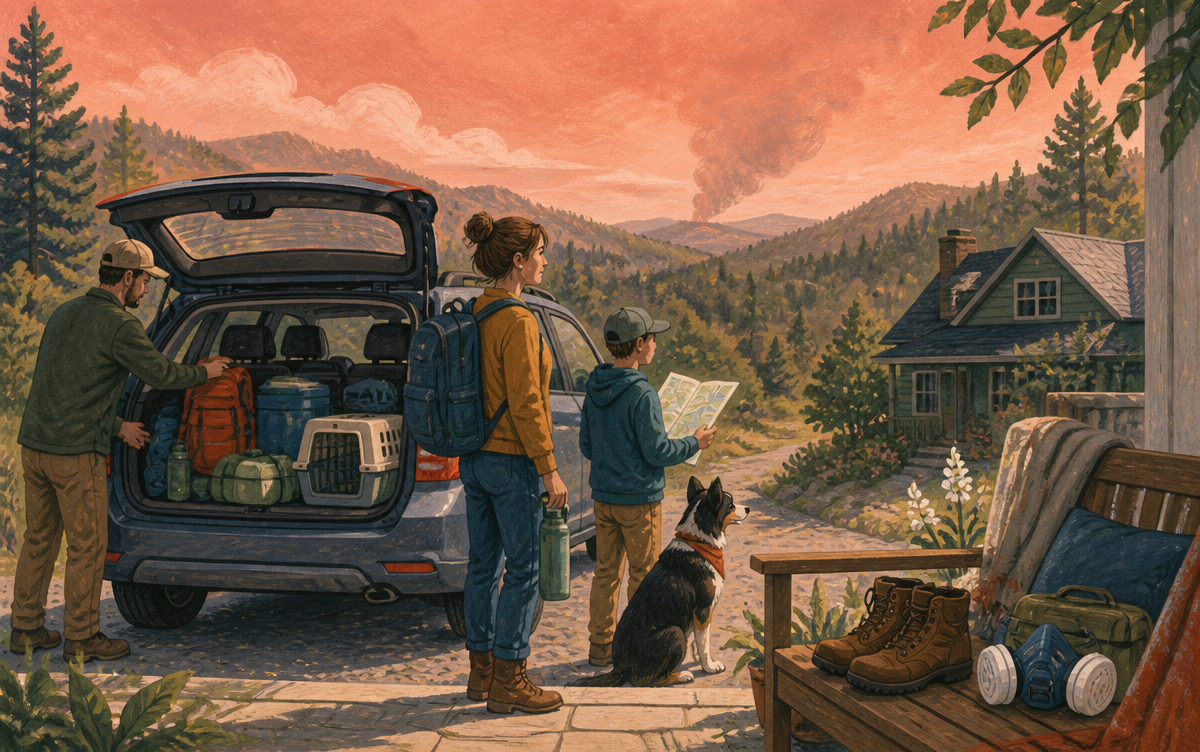
Wildfire preparation is about breathing, visibility, and having already decided where you go.
Fire moves faster than most people expect, and smoke arrives long before flame. That means two separate problems: air you can breathe and a departure you do not have to plan under pressure.
Below: what protects you from smoke, what goes in the car, and the decisions worth making on an ordinary calm day.
Smoke
0 of 4
The part that affects you first, often for days.
Dust masks
Smoke, ash and the dust of a damaged building are all things you want to keep out of your lungs, and improvised cloth does very little.
Why you need it. Smoke, ash and the dust of a damaged building are all things you want to keep out of your lungs, and improvised cloth does very little.
What to look for. FFP2/N95 respirators that seal against your face, kept flat and dry. A handful is enough; they are single-use once genuinely dirty.
Sunglasses
Glare off water, pale rock and snow is tiring and, high up, genuinely uncomfortable for hours afterwards.
Why you need it. Glare off water, pale rock and snow is tiring and, high up, genuinely uncomfortable for hours afterwards.
What to look for. Full UV protection and a wrap that keeps light out at the sides. A retaining cord saves them on windy ridges.
Stored drinking water
Water is the first thing to run short and the hardest to improvise. Three litres per person per day covers drinking and basic cooking, and having it already in the house means you never join the queue for it.
Why you need it. Water is the first thing to run short and the hardest to improvise. Three litres per person per day covers drinking and basic cooking, and having it already in the house means you never join the queue for it.
What to look for. Sealed bottles or food-grade containers holding three days' worth per person, kept somewhere cool and dark. Write the date on them and swap the stock out twice a year.
Medication buffer
For anyone on regular medication this is the most important item here, and it is the one that takes planning rather than shopping.
Why you need it. For anyone on regular medication this is the most important item here, and it is the one that takes planning rather than shopping.
What to look for. A few extra days of any prescription, arranged with your pharmacy in advance, plus a written list of doses in your document pack.
In the car
0 of 6
Loaded before a warning, not during one.
Go bag
Almost every evacuation warning gives you minutes, not hours. A packed bag turns a panic into simply picking something up on the way out.
Why you need it. Almost every evacuation warning gives you minutes, not hours. A packed bag turns a panic into simply picking something up on the way out.
What to look for. A rucksack per person holding water, snacks, a torch, a charger, medication, spare clothes and copies of documents. Repack it when the seasons change.
Document pack
Insurance, identity and medical paperwork are what make the recovery possible, and they are exactly what nobody remembers while leaving in a hurry.
Why you need it. Insurance, identity and medical paperwork are what make the recovery possible, and they are exactly what nobody remembers while leaving in a hurry.
What to look for. Copies of ID, insurance, prescriptions and property documents in a waterproof wallet, plus the same set encrypted somewhere online.
Full tank, charged batteries
Not a purchase but a habit: a car above half a tank, a charged power bank and a charged phone mean an evacuation warning is an inconvenience rather than a problem.
Why you need it. Not a purchase but a habit: a car above half a tank, a charged power bank and a charged phone mean an evacuation warning is an inconvenience rather than a problem.
What to look for. A recurring reminder to top up fuel and charge power banks on the same day each month, before any forecast that looks unpleasant.
Paper map
Navigation apps assume signal, battery and working servers. A folded local map assumes nothing and never reboots.
Why you need it. Navigation apps assume signal, battery and working servers. A folded local map assumes nothing and never reboots.
What to look for. A current road or topographic map covering your area and your likely route out, with your meeting points marked in pen.
Battery or wind-up radio
When the mobile network is congested or down, local radio is still telling you which roads are closed and where to go. It is the one information source that does not depend on your phone.
Why you need it. When the mobile network is congested or down, local radio is still telling you which roads are closed and where to go. It is the one information source that does not depend on your phone.
What to look for. A wind-up or battery radio with FM and, ideally, weather or emergency bands. A model that also charges a phone earns its shelf space.
First aid kit
Blisters, grazes and headaches are the everyday injuries, and all of them are far more manageable with a small kit in the bag.
Why you need it. Blisters, grazes and headaches are the everyday injuries, and all of them are far more manageable with a small kit in the bag.
What to look for. Blister plasters, adhesive dressings, antiseptic wipes, painkillers and a bandage. Restock it after every trip rather than before the next one.
Around the house
0 of 4
Small preparations that reduce what fire has to work with.
Fire extinguisher and blanket
Most household fires are small for about ninety seconds. That is the window in which an extinguisher within reach makes the whole difference.
Why you need it. Most household fires are small for about ninety seconds. That is the window in which an extinguisher within reach makes the whole difference.
What to look for. A multi-purpose dry powder or foam extinguisher rated for home use, plus a fire blanket in the kitchen. Check the gauge yearly.
Work gloves
Broken glass, splintered wood and hot metal are the ordinary hazards of any clean-up, and hands are what you need working for everything else.
Why you need it. Broken glass, splintered wood and hot metal are the ordinary hazards of any clean-up, and hands are what you need working for everything else.
What to look for. Tough leather or coated gloves that fit properly. Cheap thin gloves tear on the first sharp edge, which is the edge that mattered.
Sturdy boots
Anything that damages a building leaves the floor covered in things you should not walk on in trainers. Boots by the bed is a habit, not a purchase.
Why you need it. Anything that damages a building leaves the floor covered in things you should not walk on in trainers. Boots by the bed is a habit, not a purchase.
What to look for. Closed, thick-soled boots you can put on in the dark, ideally with ankle support. Keep socks tucked inside them.
Written household plan
The part people skip and later wish they had not: who collects whom, where you meet if you cannot get home, and which out-of-area contact everyone calls.
Why you need it. The part people skip and later wish they had not: who collects whom, where you meet if you cannot get home, and which out-of-area contact everyone calls.
What to look for. One page, printed, in every bag and on the fridge. Agree it out loud with everyone, including the children, and revisit it once a year.