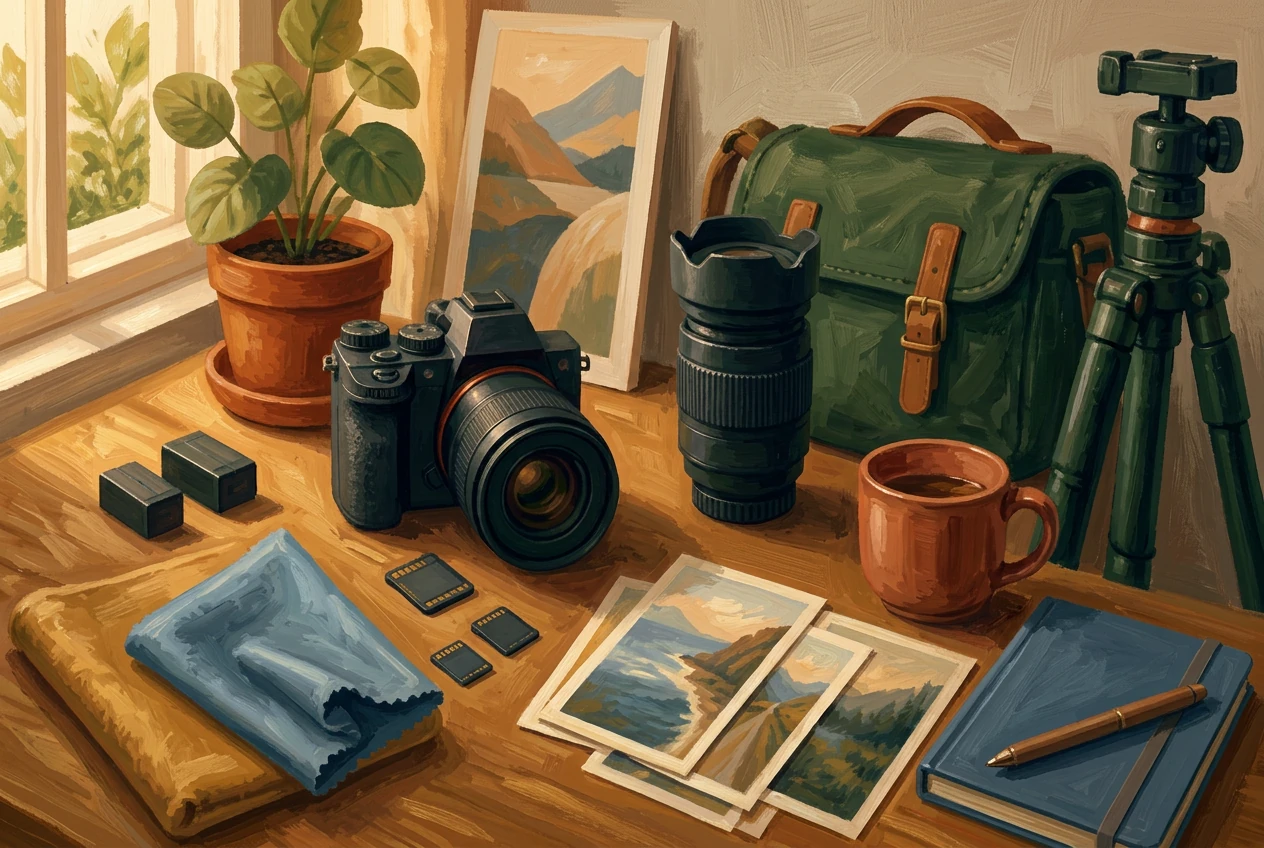
One camera, one good lens and a way to keep the files safe will take you a very long way.
The equipment that improves photographs is boringly short: a camera you understand, one lens you carry everywhere, and enough cards and batteries to keep shooting.
This list is a realistic first setup, plus the unglamorous part nobody mentions - getting the pictures off the camera and keeping them. Mark what you already own.
The camera
0 of 4
Spend the least here that gets you a camera you enjoy using.
Camera body
The body is where you will spend most of the budget and the least of the improvement. A modest recent camera is plenty for years.
Why you need it. The body is where you will spend most of the budget and the least of the improvement. A modest recent camera is plenty for years.
What to look for. An entry-level or mid-range mirrorless body with in-body or lens stabilisation. Buying used from a reputable dealer stretches the budget a long way.
One versatile lens
Lenses matter more than bodies. One good lens you always have with you beats three you leave at home.
Why you need it. Lenses matter more than bodies. One good lens you always have with you beats three you leave at home.
What to look for. A 24-70mm equivalent zoom for general use, or a bright 35mm or 50mm prime to learn with. Look at the widest aperture, not the zoom range.
Memory cards
Two medium cards are safer than one large one, and a card failing mid-trip is the one loss you cannot re-shoot.
Why you need it. Two medium cards are safer than one large one, and a card failing mid-trip is the one loss you cannot re-shoot.
What to look for. Two cards from a known brand with a write speed that matches your camera, rated V30 or higher if you shoot video.
Spare battery
Cold weather roughly halves battery life, and the good light usually arrives at the end of the day.
Why you need it. Cold weather roughly halves battery life, and the good light usually arrives at the end of the day.
What to look for. One or two genuine or well-reviewed spares, plus a charger you can run from a power bank in the car.
Carrying and steadying it
0 of 5
A camera you can carry comfortably is a camera you actually use.
Camera bag
A bag decides whether the camera comes with you. Cameras that stay home take no photographs.
Why you need it. A bag decides whether the camera comes with you. Cameras that stay home take no photographs.
What to look for. A padded shoulder bag or backpack that fits body, lens and cards, opens quickly, and does not look like expensive equipment.
Comfortable strap
The strap supplied in the box is the reason your neck aches after two hours. A better one is a small, permanent upgrade.
Why you need it. The strap supplied in the box is the reason your neck aches after two hours. A better one is a small, permanent upgrade.
What to look for. A wide padded neck strap or a sling strap that keeps the camera at your hip and lets it slide up to your eye.
Tripod
Everything past a certain point in photography needs the camera to stay still: low light, landscapes, long exposures, self-portraits.
Why you need it. Everything past a certain point in photography needs the camera to stay still: low light, landscapes, long exposures, self-portraits.
What to look for. A tripod rated well above your camera weight, with a smooth ball head. Carbon fibre if you walk with it, aluminium if it lives in the car.
Lens cleaning kit
Sea spray, rain and fingerprints ruin more images than any setting on the camera.
Why you need it. Sea spray, rain and fingerprints ruin more images than any setting on the camera.
What to look for. A blower, microfibre cloths and lens fluid. Never use a shirt sleeve on coated glass, however clean it looks.
Rain jacket
Weather turns faster than forecasts admit, and staying dry is how you stay warm.
Why you need it. Weather turns faster than forecasts admit, and staying dry is how you stay warm.
What to look for. A breathable waterproof shell that packs small enough that you actually carry it. A hood that adjusts is worth more than an extra layer.
After the shoot
0 of 4
Half of photography happens after you put the camera down.
Card reader
Copying from the camera drains the battery and is slower. A reader takes seconds and keeps the workflow simple.
Why you need it. Copying from the camera drains the battery and is slower. A reader takes seconds and keeps the workflow simple.
What to look for. A reader matched to your card type with a fast USB-C connection. A small metal one survives being carried around.
External drive
Photographs are only kept once they exist in two places. One drive plus one cloud copy is the realistic minimum.
Why you need it. Photographs are only kept once they exist in two places. One drive plus one cloud copy is the realistic minimum.
What to look for. A portable SSD of at least 1TB, plus a habit of copying every shoot the same evening. Label it and check it twice a year.
Editing software
Editing is half of photography. Straightening, cropping and lifting shadows turns a decent frame into a keeper.
Why you need it. Editing is half of photography. Straightening, cropping and lifting shadows turns a decent frame into a keeper.
What to look for. A raw editor you will actually use, whether subscription or one-off purchase. Free options are more than good enough to learn on.
Power bank
Keeps a phone, GPS watch or headlamp alive on long days, and cold weather drains batteries much faster than you expect.
Why you need it. Keeps a phone, GPS watch or headlamp alive on long days, and cold weather drains batteries much faster than you expect.
What to look for. A 10,000 mAh unit is a sensible balance of capacity and weight for most trips. Bring the right cable — the bank alone is useless.