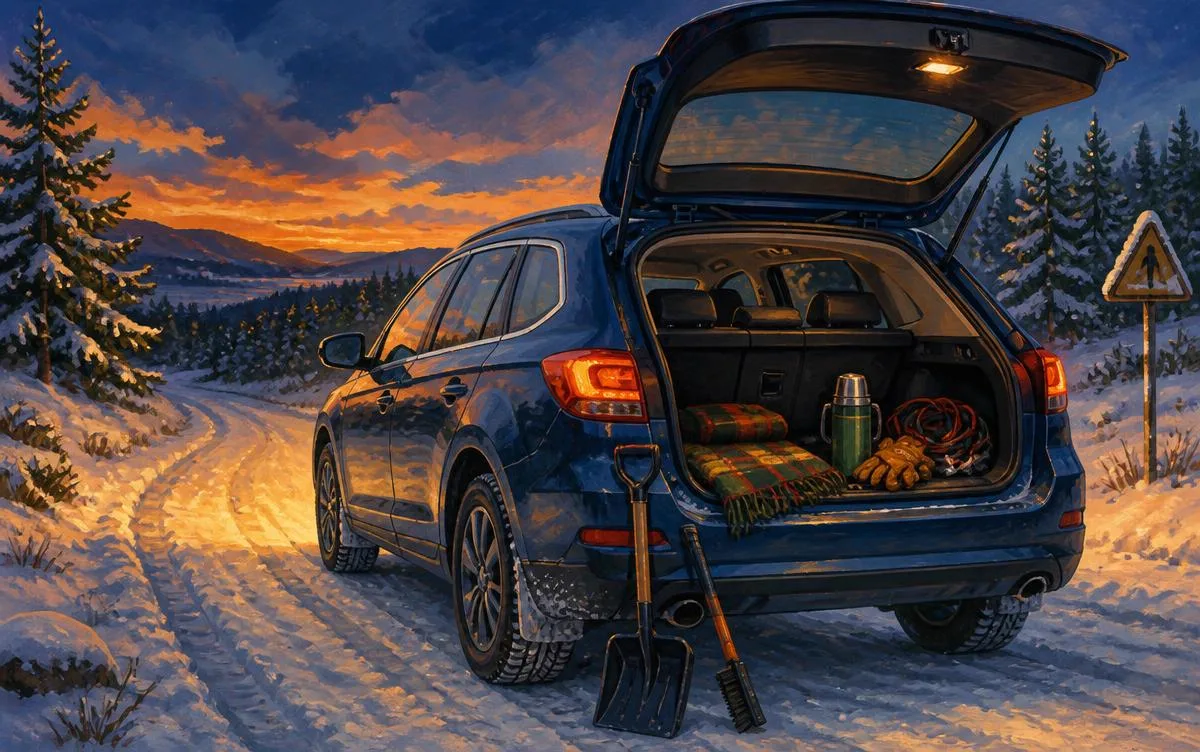
Tyres first, then the small kit that turns being stuck from an emergency into an inconvenience.
Winter driving is decided almost entirely by tyres and by how early you clear the car properly. Everything else on this list exists for the day something goes wrong.
Work through it once in autumn and the car is ready until spring. Mark what you already have, and keep the kit in the car rather than in the garage.
The car itself
0 of 6
This section does more for your safety than everything below it combined.
Winter or all-season tyres
Nothing else on this list matters as much. Tyres are the only part of the car touching the road, and rubber compound decides how it grips in the cold.
Why you need it. Nothing else on this list matters as much. Tyres are the only part of the car touching the road, and rubber compound decides how it grips in the cold.
What to look for. Proper winter tyres where winters are real, or all-season tyres marked with the three-peak snowflake. Check tread depth and the legal dates where you live.
Ice scraper
Driving with a small cleared patch of windscreen is both illegal in many places and genuinely dangerous.
Why you need it. Driving with a small cleared patch of windscreen is both illegal in many places and genuinely dangerous.
What to look for. A sturdy scraper with a brass or hard plastic edge and a comfortable grip. Keep it inside the car, not in the boot.
Snow brush
Snow left on the roof slides onto your windscreen at the first hard brake, or onto the car behind you.
Why you need it. Snow left on the roof slides onto your windscreen at the first hard brake, or onto the car behind you.
What to look for. A long-handled soft-bristle brush that reaches the middle of the roof without scratching paint. Telescopic ones store easily.
Winter screenwash and wipers
Summer screenwash freezes on the glass and blinds you. Winter roads throw up salt spray constantly.
Why you need it. Summer screenwash freezes on the glass and blinds you. Winter roads throw up salt spray constantly.
What to look for. Concentrate rated to at least -20C, mixed to the temperatures you actually get, plus wiper blades that are not already smearing.
De-icer spray
Frozen locks, frozen doors and a windscreen that scrapes for ten minutes are all a two-minute problem with a can of de-icer.
Why you need it. Frozen locks, frozen doors and a windscreen that scrapes for ten minutes are all a two-minute problem with a can of de-icer.
What to look for. A spray de-icer safe for paint and trim. A silicone spray on door seals stops doors freezing shut in the first place.
Tyre inflator
Correct pressures improve grip and fuel use, and a slow puncture becomes manageable rather than trip-ending.
Why you need it. Correct pressures improve grip and fuel use, and a slow puncture becomes manageable rather than trip-ending.
What to look for. A 12 V compressor with a clear gauge and automatic stop. Learn your car's recommended pressures before you go.
Getting unstuck
0 of 6
Being stuck is usually a small problem with the right object in the boot.
Compact snow shovel
Being stuck is usually a matter of clearing snow from in front of two wheels, and hands alone do that very slowly.
Why you need it. Being stuck is usually a matter of clearing snow from in front of two wheels, and hands alone do that very slowly.
What to look for. A folding or short-handled shovel with a metal edge that fits in the boot. Plastic blades snap in packed snow.
Traction aid
A bag of grit, a mat or a set of chains turns a spinning wheel into a moving car.
Why you need it. A bag of grit, a mat or a set of chains turns a spinning wheel into a moving car.
What to look for. Traction mats or a bag of cat litter or grit for the boot. Snow chains or socks where they are required, practised once at home first.
Tow rope or recovery strap
Someone willing to help is common. Something to connect the two cars is not.
Why you need it. Someone willing to help is common. Something to connect the two cars is not.
What to look for. A rated recovery strap or rope well above your car weight, with proper hooks, plus knowledge of where your car towing eye is.
Jumper cables
A flat battery in an unfamiliar place is the most common way a trip stalls, and it is entirely fixable with help nearby.
Why you need it. A flat battery in an unfamiliar place is the most common way a trip stalls, and it is entirely fixable with help nearby.
What to look for. Heavy-gauge cables long enough to reach between two cars parked nose-to-nose, or a self-contained jump starter.
Work gloves
Broken glass, splintered wood and hot metal are the ordinary hazards of any clean-up, and hands are what you need working for everything else.
Why you need it. Broken glass, splintered wood and hot metal are the ordinary hazards of any clean-up, and hands are what you need working for everything else.
What to look for. Tough leather or coated gloves that fit properly. Cheap thin gloves tear on the first sharp edge, which is the edge that mattered.
Warning triangle and hi-vis vest
If you have to stop on a road, being seen early is what keeps you safe — and in many countries it is a legal requirement.
Why you need it. If you have to stop on a road, being seen early is what keeps you safe — and in many countries it is a legal requirement.
What to look for. Check the rules for every country on your route; some require two triangles, a vest per occupant, or spare bulbs.
If you have to wait
0 of 7
A cold car empties of heat within minutes, so plan for the wait.
Warm layers and gloves
If you stop and wait for help, the car cools within minutes. Coats left at home help nobody.
Why you need it. If you stop and wait for help, the car cools within minutes. Coats left at home help nobody.
What to look for. A warm hat, gloves and an extra jacket per regular passenger, kept in the car all winter rather than remembered per trip.
Emergency blanket
If the heating stops in winter, the problem is not the cold outside but the heat leaving you. A foil blanket or two costs almost nothing and buys hours of warmth.
Why you need it. If the heating stops in winter, the problem is not the cold outside but the heat leaving you. A foil blanket or two costs almost nothing and buys hours of warmth.
What to look for. Foil survival blankets or bivvy bags, one per person, plus a proper wool or fleece blanket if you have the space for it.
Vacuum flask
A hot drink while you wait for recovery changes a miserable hour into a manageable one, especially with children in the car.
Why you need it. A hot drink while you wait for recovery changes a miserable hour into a manageable one, especially with children in the car.
What to look for. A stainless vacuum flask that genuinely holds heat for hours, with a lid you can drink from.
Snack box
Food you brought is cheaper, faster and better than whatever the last service station has left, and it keeps everyone level-headed.
Why you need it. Food you brought is cheaper, faster and better than whatever the last service station has left, and it keeps everyone level-headed.
What to look for. A sealable box of things that survive warmth — nuts, dried fruit, crackers. Keep it within reach, not in the boot.
Headlamp
Hands-free light for a pre-dawn start, an unexpected late finish, or finding anything at all inside a tent.
Why you need it. Hands-free light for a pre-dawn start, an unexpected late finish, or finding anything at all inside a tent.
What to look for. A small lamp with a low mode for camp and a bright mode for walking, plus spare batteries or a charged battery pack.
Power bank
Keeps a phone, GPS watch or headlamp alive on long days, and cold weather drains batteries much faster than you expect.
Why you need it. Keeps a phone, GPS watch or headlamp alive on long days, and cold weather drains batteries much faster than you expect.
What to look for. A 10,000 mAh unit is a sensible balance of capacity and weight for most trips. Bring the right cable — the bank alone is useless.
First aid kit
Blisters, grazes and headaches are the everyday injuries, and all of them are far more manageable with a small kit in the bag.
Why you need it. Blisters, grazes and headaches are the everyday injuries, and all of them are far more manageable with a small kit in the bag.
What to look for. Blister plasters, adhesive dressings, antiseptic wipes, painkillers and a bandage. Restock it after every trip rather than before the next one.